Disaster science operations center · WKU
Resilience against all
hazards
The Disaster Science Operations Center (DSOC), housed at Western Kentucky University, is the Commonwealth's leading hub for expert weather intelligence, disaster resilience, novel research, and hyperlocal decision support, run by faculty and students who work real events and real disasters.
DSOC · Mission briefing
An operations center that teaches
DSOC was born from a 2019 visit to Amazon's Global Security Operations Center, and proved itself before its room existed. When a tornado struck near campus on December 11, 2021, the team was already operational, working the event without a facility to work it from.
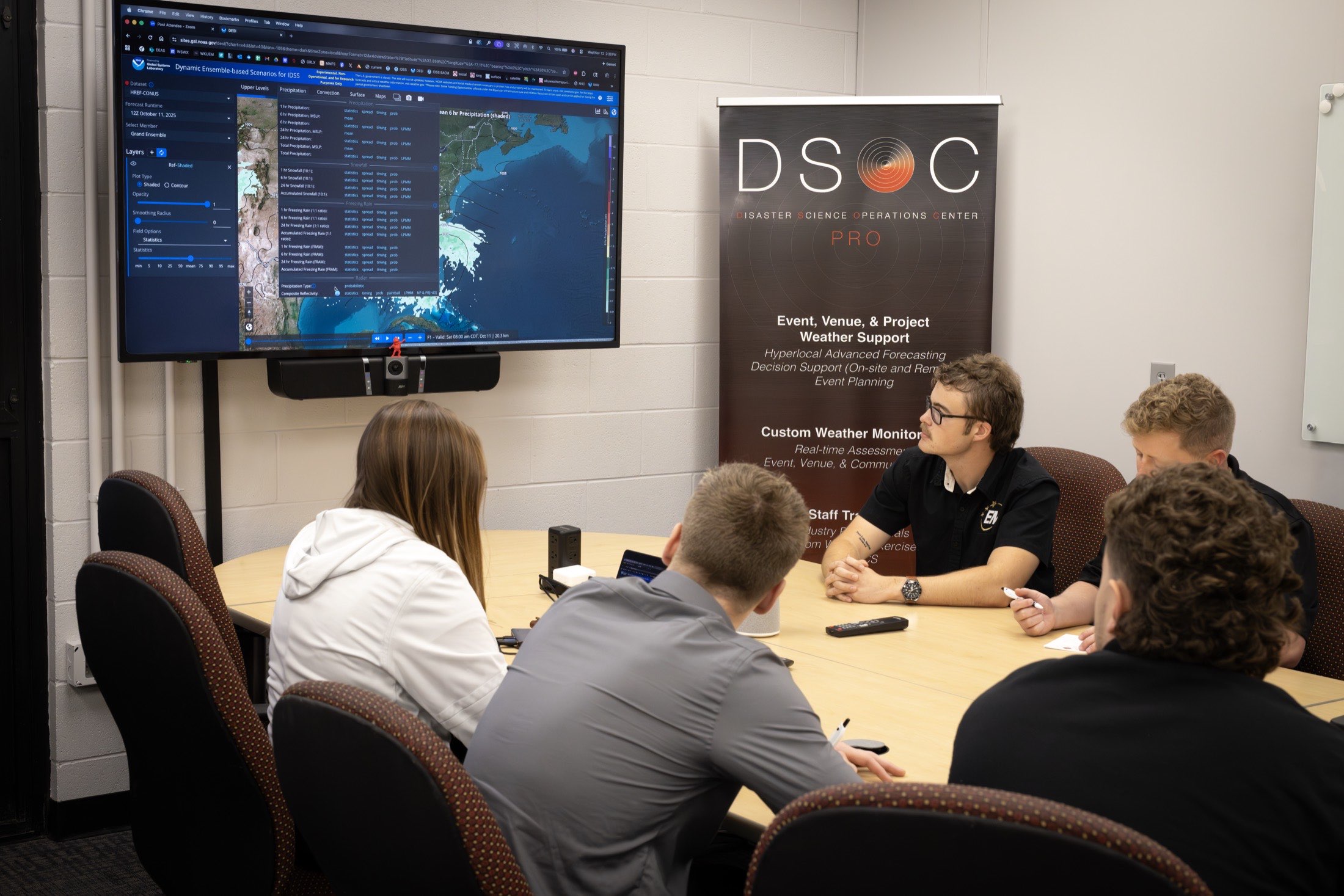
Today DSOC connects students with faculty, staff, and experienced emergency-management professionals to deliver planning and operational support to clients from Bowling Green to the national stage, every shift staffed by students doing the real thing.
More about DSOC- Established
- Dedicated November 4, 2022, in Environmental Science & Technology Hall
- Home
- Department of Earth, Environmental, and Atmospheric Sciences
Ogden College of Science & Engineering - Directors
- Dr. Josh Durkee, University Meteorologist · Dr. David Oliver, University Emergency Manager
- Recognition
- Kentucky Association of Mitigation Managers “Mitigation Project of the Year,” 2022
DSOC · Services
Practical, timely solutions
Preparedness and scalable weather decision support for daily operations and events of all sizes, remote or on-site, as part of your incident management team.
Event support
Contemporary planning and decision support for events of all sizes
Details → SVC-02Meteorological services
Tailored custom weather forecasting and monitoring
Details → SVC-03Disaster response
Operational support for disaster response
Details → SVC-04Research
Applied research and data analytics for operational product development
Details → SVC-05Educational outreach
Programs for public safety and all-hazards preparedness
Details →DSOC · Operations
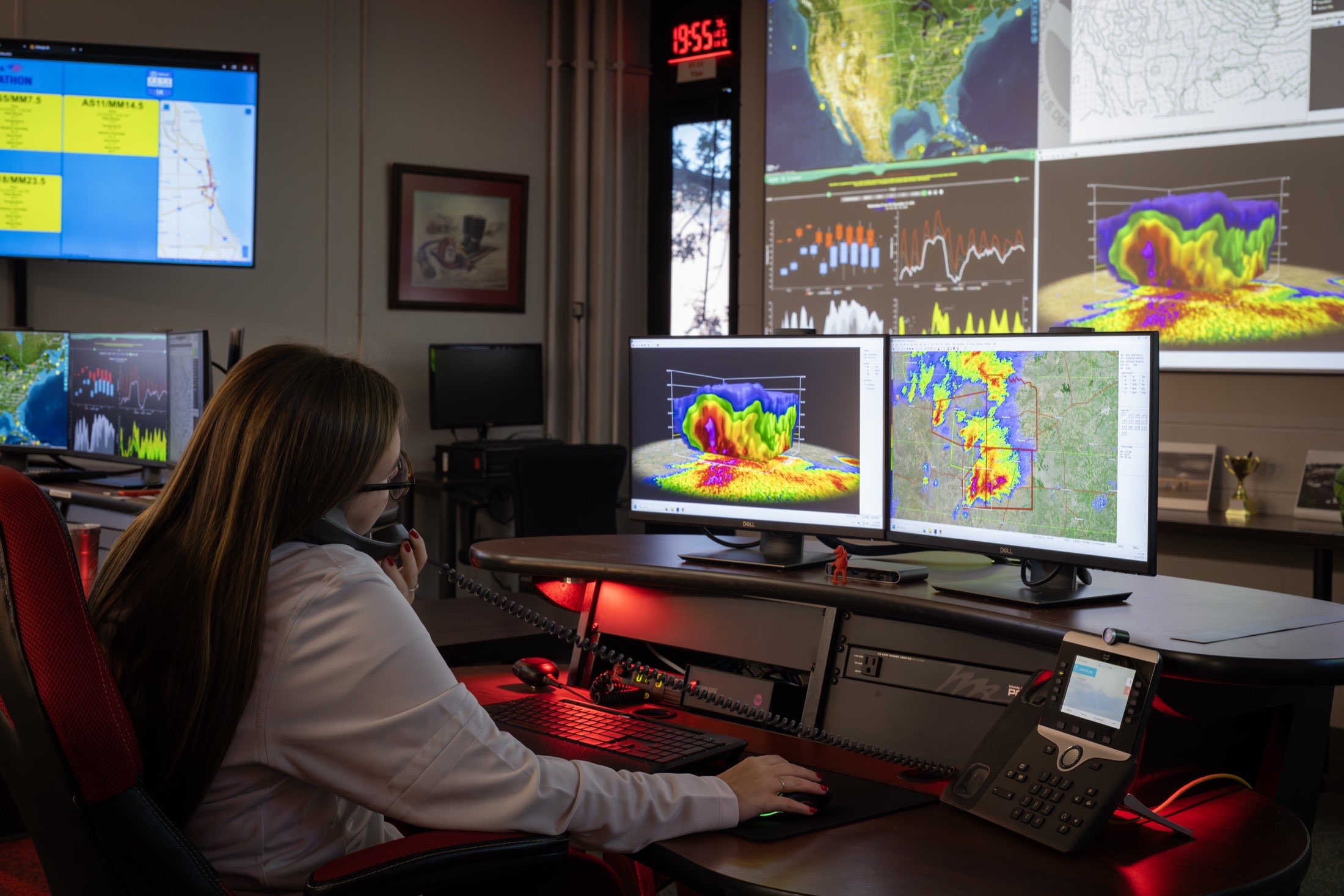
The ops floor
Forecasters, emergency-management operators, planners, and analysts, undergraduate and graduate students staffing a working operations center.
DSOC · Learn & build
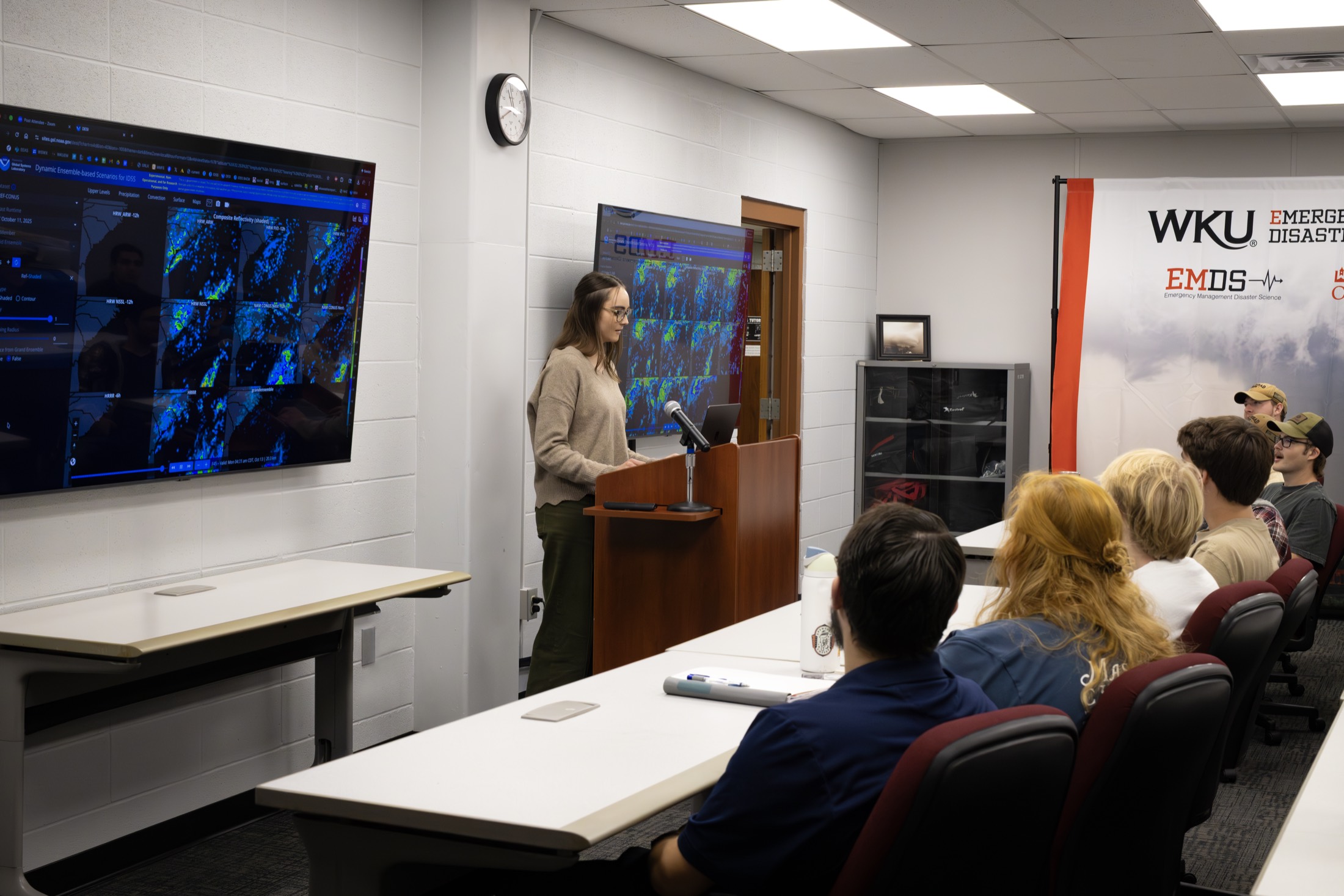
From the classroom to the storm desk
Disaster Science at WKU spans a meteorology program more than 100 students strong, Emergency Management Disaster Science certificates at the undergraduate and graduate levels, and a Disaster Science master's option, all with a working operations center as its learning laboratory.
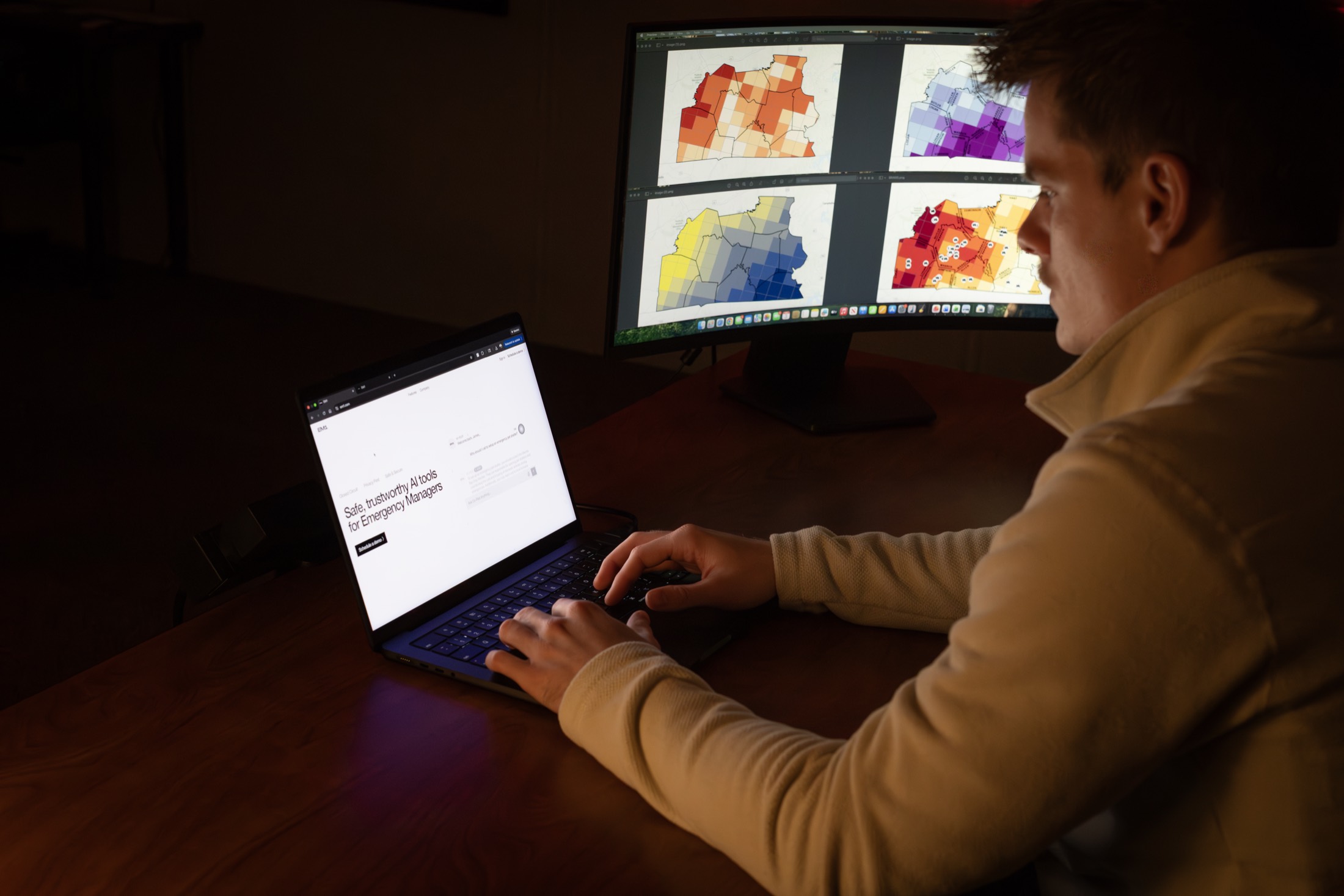
In the DSOC AI Research Lab (AIR Lab), students and faculty conduct exciting research, and build live decision-support tools, hazard maps, flood trackers, and warning overlays that anyone can use today.
DSOC Pro · Professional services
Weather support for organizations that can't afford surprises
Move beyond apps and regional forecasts by prioritizing event safety and success with expert-level hyperlocal (event-scale) forecasting, custom monitoring, staff training, and data analytics for business, industry, and government, delivered by senior faculty and professional staff from the WKU Innovation Campus.